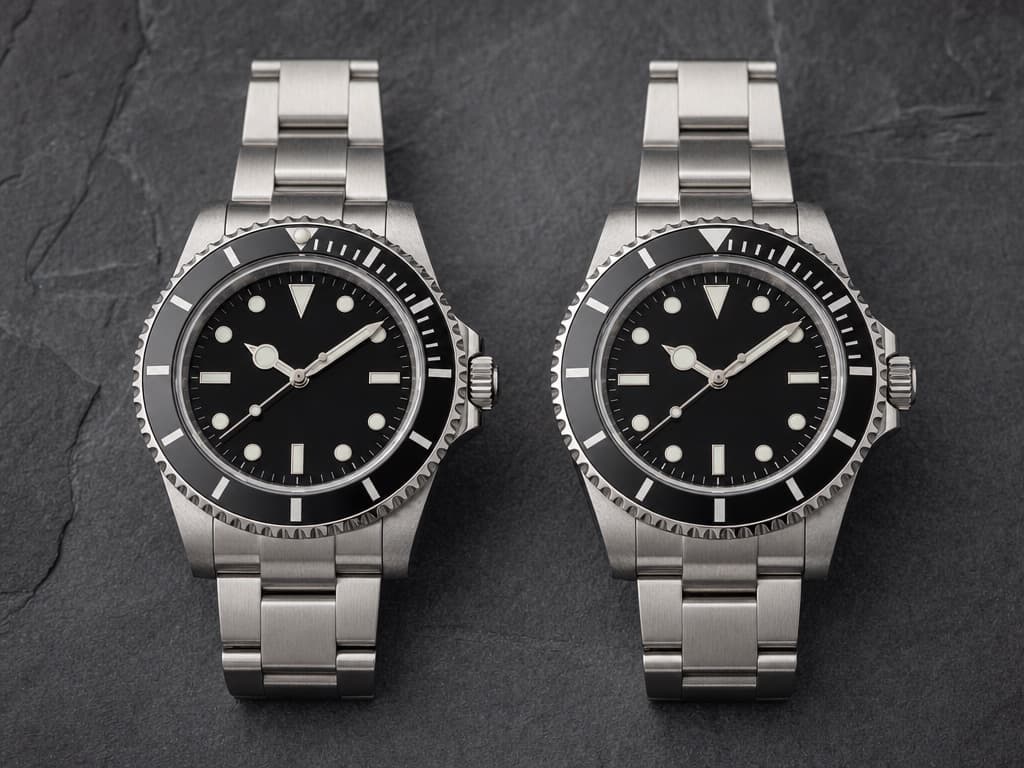

Comparing a fake Rolex to a real one is easier than judging either in isolation. Put them next to each other and the differences that are subtle on their own become obvious, because you have a reference for what correct looks like.
This guide lists fifteen specific differences, grouped by where you look, and ranks how reliable each one is. Some tells are conclusive on their own. Others only mean something in combination.
The complete comparison
| # | What to look at | Real | Fake | Reliability |
|---|---|---|---|---|
| 1 | Weight in the hand | Dense, heavier than it looks | Noticeably light | High |
| 2 | Seconds hand motion | Smooth sweep, 8 beats per second | Often ticks once per second | High |
| 3 | Date magnification | About 2.5x, fills the bubble | Weak, date looks small | High |
| 4 | Caseback | Plain solid steel | Display window or engraving | High |
| 5 | Rehaut engraving | Crisp, aligned, serial at 6 | Shallow or misaligned | High |
| 6 | Crystal crown etch | Tiny, hard to see, inside the glass | Obvious or printed on top | Medium |
| 7 | Dial text under a loupe | Razor sharp edges | Furred or bleeding | High |
| 8 | Hour markers | Applied metal, seated level | Printed or sitting unevenly | High |
| 9 | Bezel action | Firm, precise, no play | Loose or gritty | Medium |
| 10 | Bracelet links | Solid, no rattle | Hollow, audible rattle | High |
| 11 | Clasp | Firm positive click, sits flush | Loose, gaps at the joint | Medium |
| 12 | Crown winding feel | Smooth with even resistance | Gritty or too easy | Medium |
| 13 | Lume | Even and long lasting | Patchy, fades quickly | Medium |
| 14 | Case finishing transitions | Crisp brushed to polished lines | Soft, rounded, blurred | High |
| 15 | Price | At market rate | Far below market | High |
Case and exterior
1. Weight
The single fastest test. Genuine cases and bracelets use a dense steel alloy, and the finished watch feels heavier than its dimensions suggest. Counterfeits use cheaper, lighter steel and frequently hollow the bracelet links.
Held side by side the difference is unmistakable. Held alone it is still noticeable once you know what to expect.
4. The caseback
The vast majority of genuine Rolex watches have a plain, smooth steel caseback. No display window showing the movement, no engraved logos, no model names.
A clear caseback on a watch presented as a Rolex is close to conclusive. There are narrow historical exceptions, so treat it as a very strong signal rather than absolute proof.
14. Finishing transitions
Look at where a brushed surface meets a polished one, particularly along the lug edges. On a genuine watch that line is crisp and dead straight. On counterfeits it is softened and slightly rounded, because the finishing is done faster and with less precision.
This is one of the most reliable tells and one of the hardest to fake, but it takes a genuine example nearby to calibrate against.
15. Price
A steel sports Rolex does not sell for a few hundred dollars. If the asking price is far below the market rate for that reference, the question is already answered. Unusually cheap is a signal, never a bargain.
Dial and crystal
3. Date magnification
The cyclops lens over the date magnifies it by roughly two and a half times, and the date should nearly fill the bubble. Counterfeits routinely under-magnify, leaving obvious space around the numerals, or set the bubble slightly off centre.
6. The crystal crown etch
From about 2002, a tiny crown is laser-etched into the crystal at six o'clock. It is deliberately difficult to see and only appears when you tilt the watch under direct light.
Fakes make two mistakes: making it too visible, or printing it on the surface where it can be felt or scratched. On watches predating roughly 2002 its absence is normal and means nothing.
7. Dial text
Under a magnifier, genuine dial printing has clean, sharp edges and even spacing, including on the smallest lines of text. Counterfeit printing tends to look slightly furred, with edges that bleed.
Look at the smallest text on the dial rather than the brand name, because that is where the resolution gap shows first.
8. Hour markers
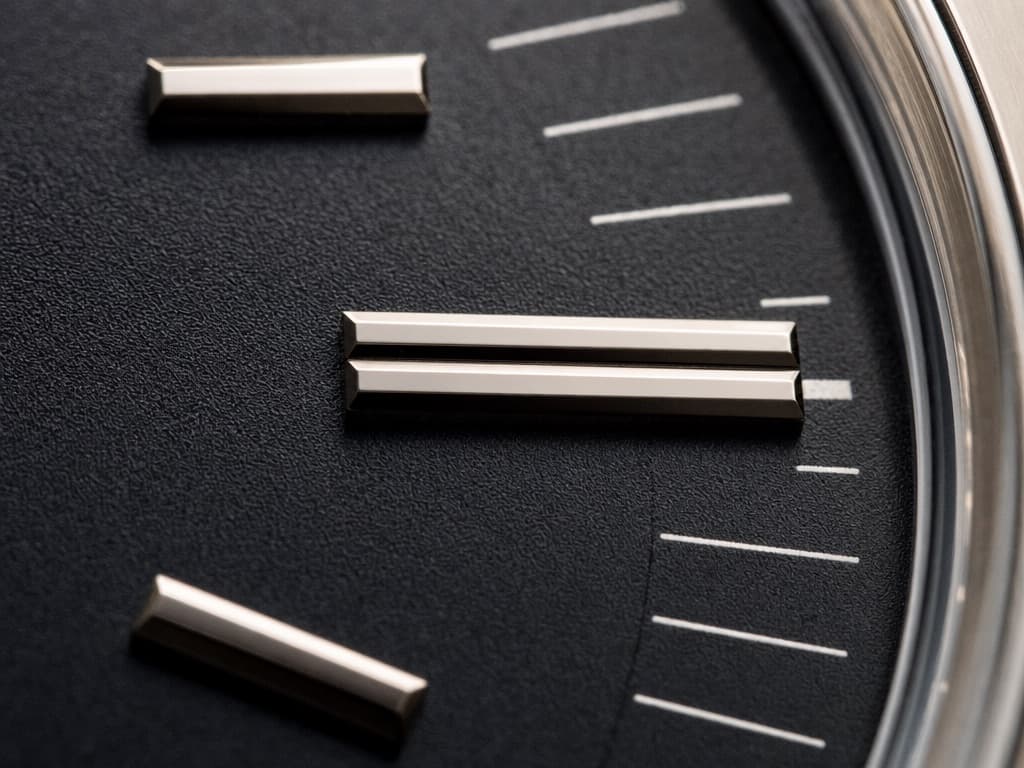
Genuine markers are applied metal components, seated flush and perfectly level. Counterfeits either print them onto the dial or apply them with visible unevenness. Tilt the dial under light and watch how each marker catches it. They should all catch it identically.
13. Lume
Charge the dial under a strong light for thirty seconds, then move to darkness. Modern genuine lume glows blue and holds for a long time; older watches glow green.
Every marker and both hands should glow at the same intensity. Patchiness, dim markers, or a glow that fades within a couple of minutes all point away from authenticity.
Movement and feel
2. The seconds hand
Genuine modern movements run at 28,800 vibrations per hour, eight beats per second, so the seconds hand appears to sweep smoothly.
12. Crown winding
Unscrew the crown and wind. Genuine winding has an even, slightly firm resistance and a solid mechanical feel. Counterfeits often feel gritty, hollow, or unnaturally easy to turn.
9. Bezel action
On a rotating bezel model, the bezel should turn with firm, precisely spaced clicks and no vertical play. Loose, gritty, or unevenly spaced clicks indicate lower-grade manufacturing.
Bracelet and clasp
10. Bracelet links
Genuine bracelets use solid links throughout. Hold the watch by the case and let the bracelet hang, then shake it gently. It should feel dense and quiet.
Hollow links produce an audible rattle and a light, tinny feel. This is one of the easiest differences to detect without any reference watch.
11. The clasp
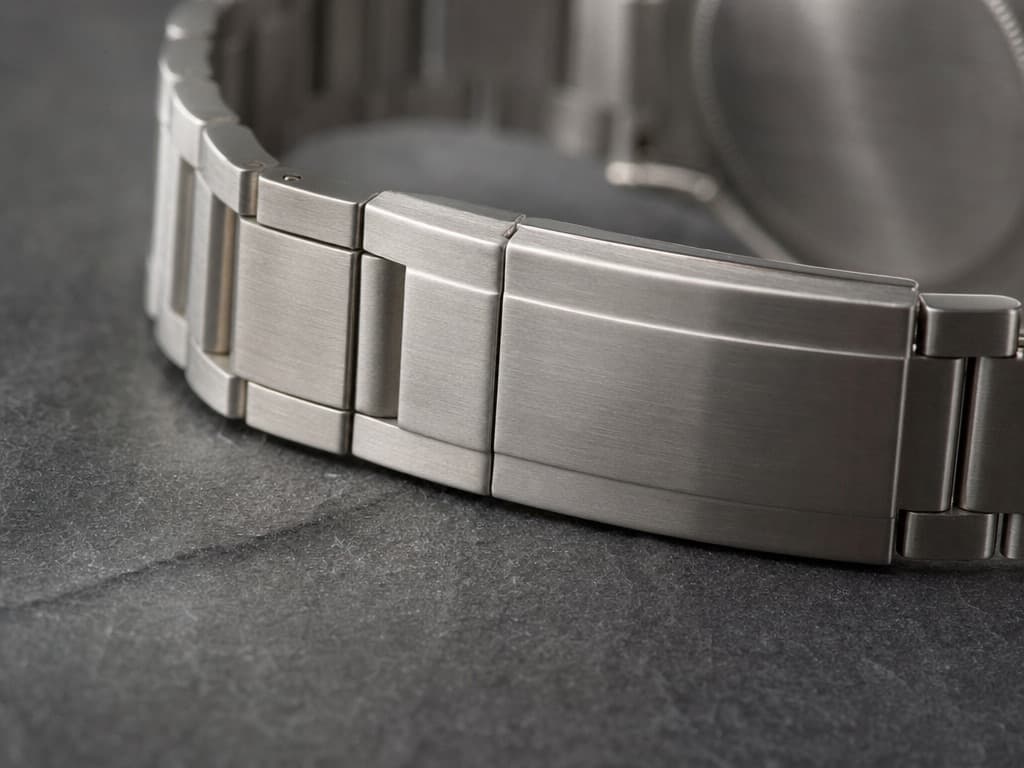
The clasp should close with a firm, positive click and sit completely flush when shut. Gaps at the joint, a clasp that pops open under light pressure, or one that closes with a soft feel all indicate a counterfeit.
5. The rehaut
The rehaut is the inner ring between dial and crystal. From about 2005, Rolex engraves ROLEX repeatedly around it, with the serial at six o'clock.
The engraving must be crisp and precisely aligned with the hour markers. Misalignment here is one of the most dependable modern counterfeit tells, because getting it right requires accuracy that cheap production cannot hold.
Which tells actually settle it
Not all fifteen carry equal weight. If you only have a minute, these four resolve most cases:
- Weight. Instant and hard to fake.
- Caseback. A display window effectively ends the question.
- Date magnification. Consistently wrong on counterfeits.
- Price. Far below market answers it before you look at the watch.
And the three that most often mislead people:
- A sweeping seconds hand, which good fakes also have.
- Papers and a box, which are faked routinely.
- A heavy feel alone, since better counterfeits have improved on weight considerably.