
A Rolex serial number tells you roughly when the watch was made. That is genuinely useful, and it is also the entire extent of what the number proves on its own.
This guide covers where to find the number, how to read it across the three different serial eras, an approximate year reference, and the important limitation that most lookup pages skip over.
Where to find the serial number
The location depends on when the watch was made, and there are two places to look.
Between the lugs, at 6 o'clock
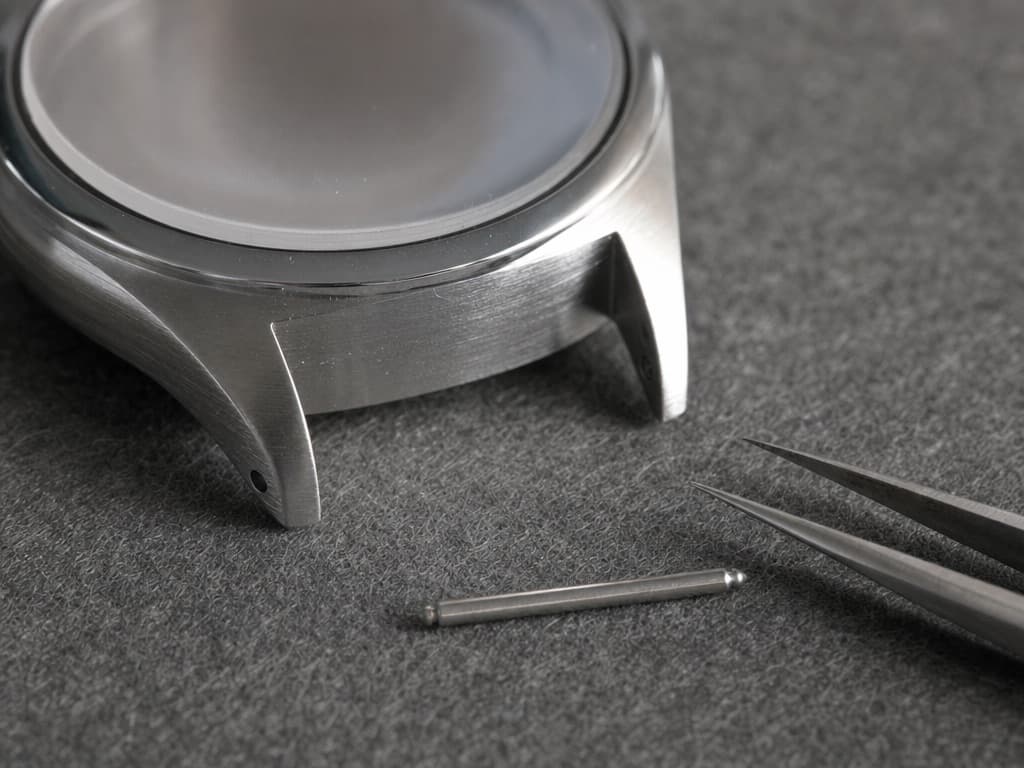
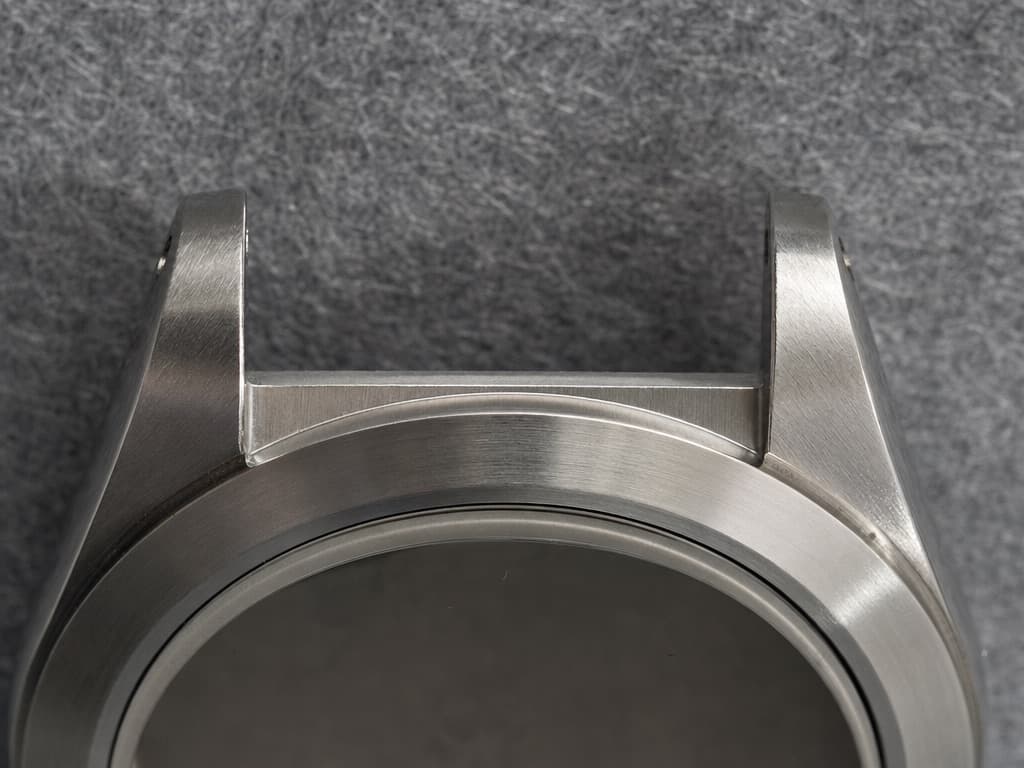
On watches made before roughly 2005, the serial is engraved into the case between the lugs at the six o'clock position. It is hidden underneath the bracelet, so you have to remove the bracelet or spring bar to see it.
This is a job worth doing carefully, or having a watchmaker do, because scratching the lugs while levering a spring bar out is a common and avoidable mistake.
On the rehaut, at 6 o'clock
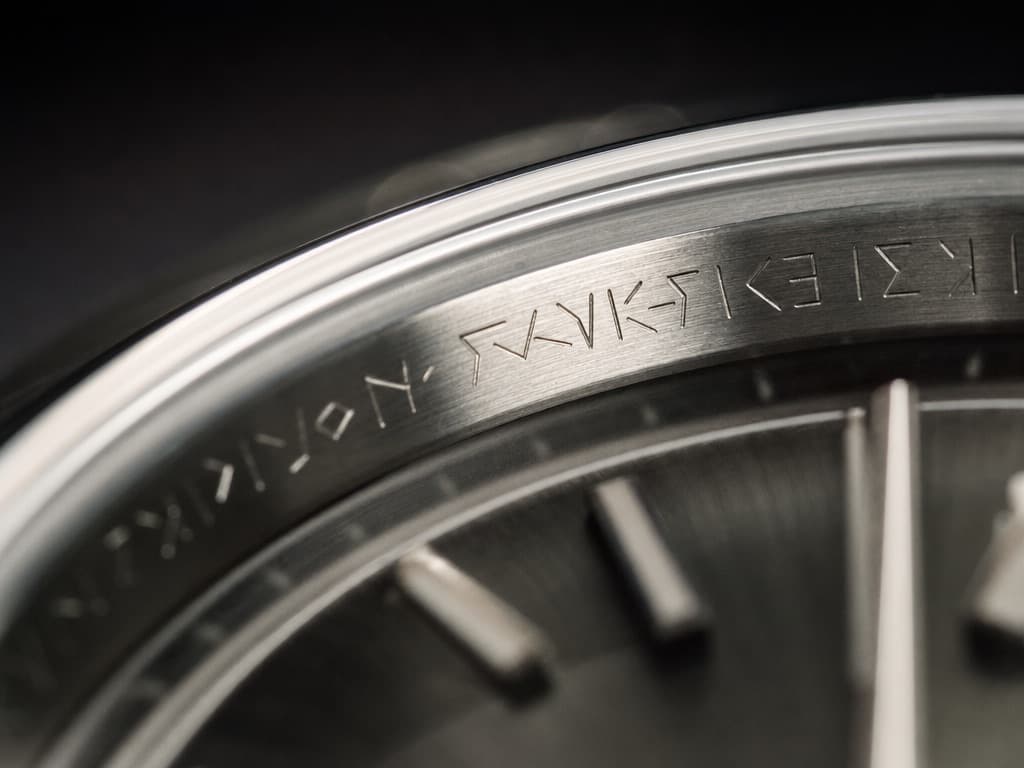
From roughly 2005 onward, Rolex engraves the serial on the rehaut, which is the slim inner ring between the dial and the crystal. Look at the six o'clock position with the watch under good light and slightly tilted.
This one requires no disassembly. On watches from this era the same number should also appear between the lugs.
The three serial eras
Rolex has used three different numbering systems, and which one your watch falls into immediately narrows its age.
Sequential numbers, before roughly 1987
Purely numeric and issued broadly in sequence, so a higher number generally means a later watch. Dating within this era relies on published production-range tables and is approximate.
Letter prefix, roughly 1987 to 2010
A single letter followed by six digits, for example F123456. The letter is the useful part, because each one corresponds to a rough production window. This is the era most lookup charts are built around.
Random serials, roughly 2010 onward
Rolex moved to randomised alphanumeric serials, typically eight characters mixing letters and numbers. These deliberately encode nothing about production date.
If your serial looks random and does not fit the letter-prefix pattern, the watch is likely from 2010 or later, and the serial will not date it more precisely than that.
Approximate letter-prefix reference
| Prefix | Approximate years |
|---|---|
| R | 1987 to 1988 |
| L | 1989 to 1990 |
| E | 1990 to 1991 |
| X | 1991 to 1992 |
| N | 1991 to 1992 |
| C | 1992 to 1993 |
| S | 1993 to 1994 |
| W | 1994 to 1995 |
| T | 1996 |
| U | 1997 to 1998 |
| A | 1998 to 1999 |
| P | 2000 |
| K | 2001 |
| Y | 2002 to 2003 |
| F | 2003 to 2005 |
| D | 2005 to 2006 |
| Z | 2006 to 2007 |
| M | 2007 to 2008 |
| V | 2008 to 2010 |
| G | 2010 to 2011 |
The serial number is not the reference number
These two get confused constantly, and they answer different questions.
| Serial number | Reference number | |
|---|---|---|
| Tells you | Roughly when it was made | Which model it is |
| Where | Between lugs at 6, or the rehaut | Between lugs at 12 |
| Format | Letter plus digits, or random | 4 to 6 digits, sometimes with a suffix |
| Unique? | Yes, per watch | No, shared by every watch of that model |
If you are trying to identify what a watch is, you want the reference number at twelve o'clock, not the serial at six.
What the serial can and cannot tell you
It can tell you
- The approximate production window, within a year or two for letter-prefix watches.
- Whether the case is consistent with the model. A reference that was only produced from 2015 paired with a 1990s serial is a clear problem.
- Whether the rehaut and lug serials agree, which is a meaningful internal consistency check.
It cannot tell you
- Whether the watch is genuine. This is the important one. Counterfeiters routinely copy valid serial numbers from real watches, sometimes the same number across many fakes.
- Service history or originality of parts. A genuine case can hold a replaced dial, bezel or bracelet.
- Ownership history. Rolex does not provide public serial lookups, and no third-party database has authoritative records.
How counterfeits handle serials
Knowing the common failures makes the engraving itself a useful check, separate from the number it spells.
- Poor engraving quality. Genuine engraving is fine, even in depth, and crisp at the edges. Counterfeit engraving is often shallow, acid-etched with a sandy texture, or uneven across the string. Run a fingernail across it. It should feel precise, not rough.
- Misaligned rehaut text. On modern watches the rehaut engraving must line up correctly with the hour markers. Alignment is where cheaper production fails.
- Duplicated numbers. If you can find the exact serial listed on multiple watches for sale online, that is a strong signal.
- Impossible combinations. A serial prefix that predates the reference's production start is conclusive.
A practical sequence
- Find the number. Rehaut first, since it needs no tools. Between the lugs if the watch predates roughly 2005.
- Identify the era. Sequential, letter prefix, or random.
- Date it approximately using the table above, treating the result as a window.
- Cross-check the reference number at twelve o'clock against the production years for that model.
- Inspect the engraving quality itself, which tells you more about authenticity than the number does.
- Then judge the watch, using the physical checks that actually establish authenticity.